

Pantry & storage cabinets
The problem with a pantry is never capacity. It’s that half of what’s in there is behind something else, so you buy a third jar of cumin because you can’t see the first two.
Design
Build
Depth is the enemy. A 600 mm deep fixed shelf holds a lot and shows you the front 200 mm of it, which is why deep pantries reliably become archaeological sites.
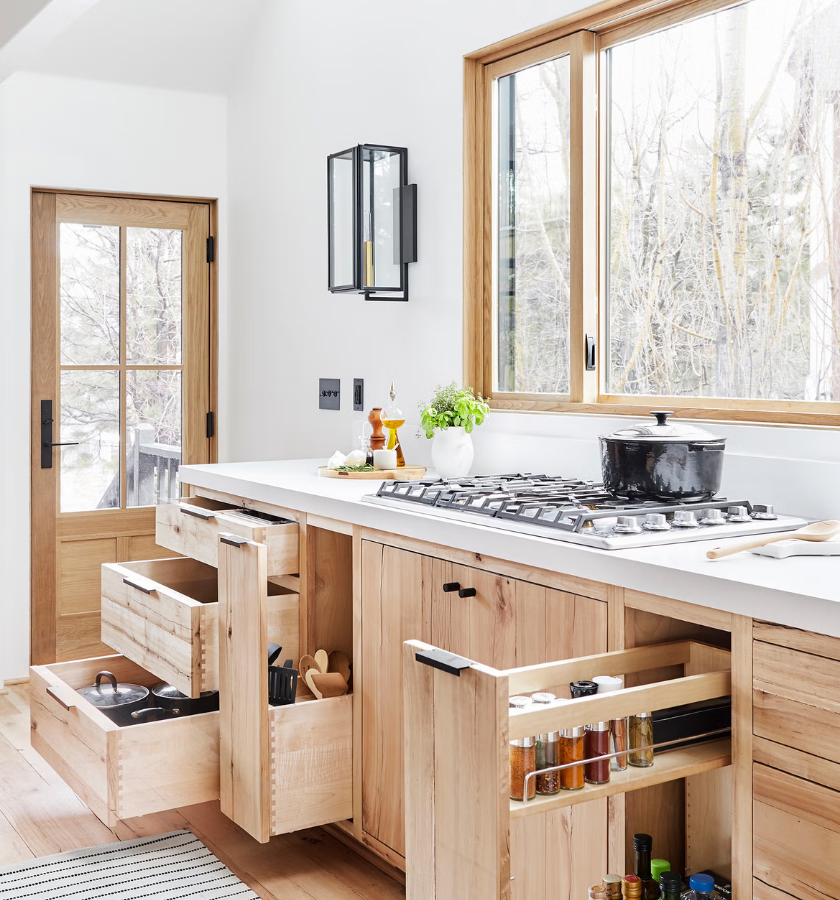
Pull-out shelving fixes this completely. The same depth, but everything comes out to you and every item is visible from above. It costs more per linear foot than fixed shelving and it is the single upgrade that most changes how a pantry functions.
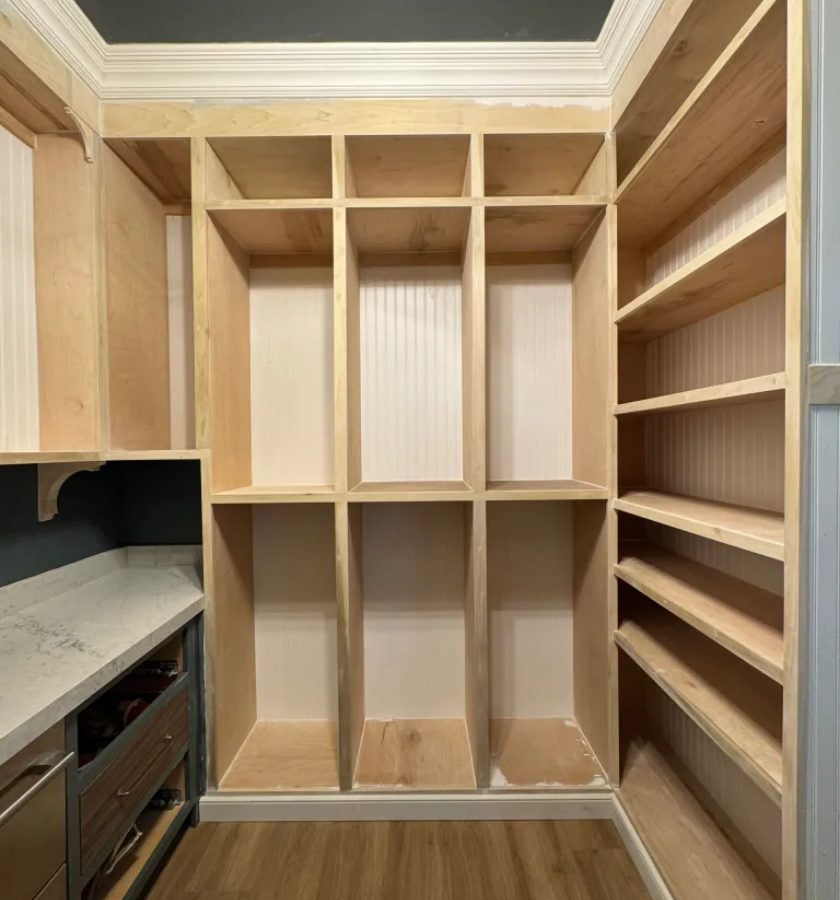
For a walk-in pantry the rule is different: shallow shelves on more walls beat deep shelves on fewer. Roughly 300–350 mm deep, floor to ceiling, on every available surface. You see everything, nothing hides, and the total capacity is higher than the deep-shelf version anyway.
Cabinet pantry or walk-in
Cabinet pantry
- Tall cabinet in the kitchen run, typically 600 mm deep
- Pull-out shelving is essential at this depth, not a luxury
- Door-mounted racks add shallow storage for spices and oils
- Takes no extra floor area — fits in the kitchen you already have
Walk-in pantry
- Needs roughly 900 mm of clear floor to move in
- Shallow shelves — 300–350 mm — on every wall, floor to ceiling
- Room for small appliances, which frees the kitchen counter
- Worth adding an outlet inside for a coffee station or appliance garage
What survives a bathroom
What to put inside
Pull-out shelves
Full-extension slides so the whole shelf clears the cabinet. Half-extension slides leave the back third unreachable, which recreates the problem you were solving. Worth specifying explicitly.
Adjustable shelving
32 mm hole spacing lets you reset shelf heights as what you store changes. Fixed shelving locks you into today’s assumptions about cereal box heights.
Deep drawers at the base
For bulk items, root vegetables and pet food. Heavy things belong low, and a drawer means you’re looking down into them rather than crouching and reaching.
Door racks
Shallow shelves on the back of the door hold spices, oils and small jars where you can see all of them at once. Free storage on a surface that’s otherwise doing nothing.
An appliance garage
A cubby with an outlet for the toaster, kettle or stand mixer. In a walk-in pantry this is the feature that most reduces kitchen counter clutter, and it needs an electrician involved at the right stage.
Storage cabinets beyond the kitchen
The same principles apply to any deep storage — utility cupboards, under-stair voids, basement storage rooms. Depth without pull-outs means losing the back half.
Under-stair space is the one we’re asked about most, and it’s a good example of where custom earns its cost. The rake means no modular unit fits, but a set of graduated drawers or pull-out towers following the slope turns an unusable triangle into serious storage. It’s fiddly to build and worth doing properly.
Basement storage rooms benefit from open adjustable shelving rather than cabinetry — cheaper per linear foot, and you want to see what’s there. If your basement is unheated or prone to damp, keep the bottom shelf clear of the floor.
Pricing Plan
Chose best plan to upgrade your kitchens and closets
Basic
$
45
/Once
- quasi architecto beatae
- dicta sunt explicabo
- ipsam voluptatem quia
- Neque porro quisquam
Premium
$
93
/Once
- quasi architecto beatae
- dicta sunt explicabo
- ipsam voluptatem quia
- Neque porro quisquam
- dicta sunt explicabo
Standard
$
55
/Once
- quasi architecto beatae
- dicta sunt explicabo
- ipsam voluptatem quia
- Neque porro quisquam
FAQs
Everything You Need to Know
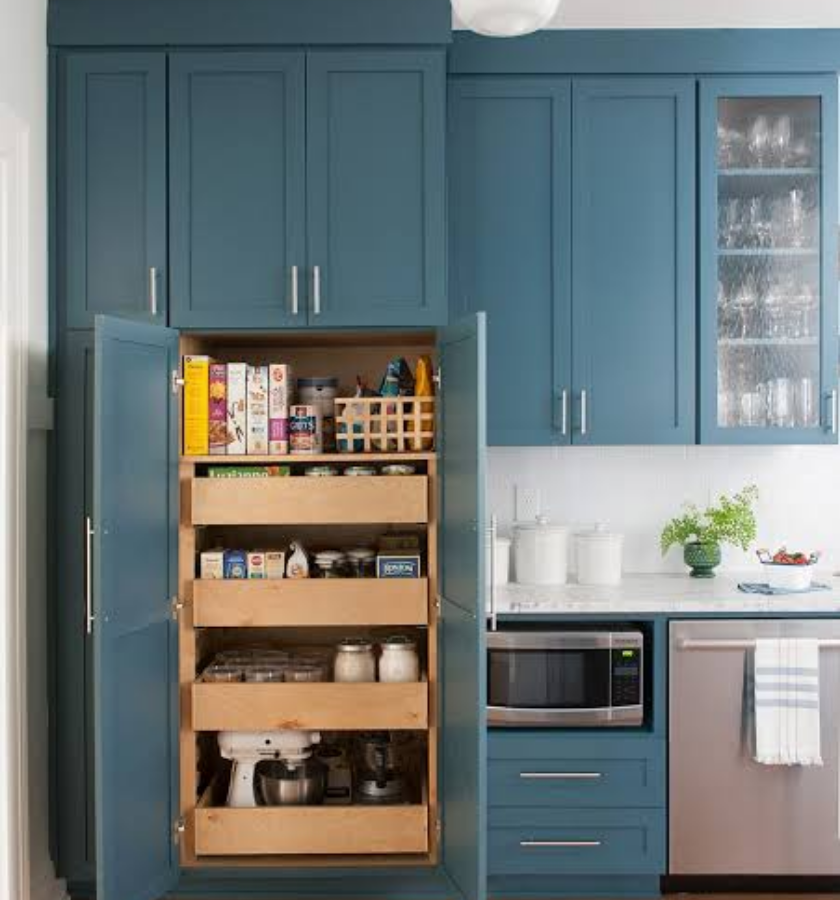
In any cabinet deeper than about 350 mm, yes. Without them you lose practical use of the back half, so you're paying for depth you can't reach. It's the single most effective pantry upgrade.
Around 300 to 350 mm for fixed shelving, so everything stays visible. Deeper than that and you need pull-outs. In a walk-in, shallow shelves on more walls hold more usable storage than deep shelves on fewer.
Roughly 900 mm of clear floor to stand and turn, plus shelf depth on the walls. Below that, a tall cabinet pantry with pull-outs will serve you better than a cramped walk-in.
Yes, and it's one of the best uses of that space. The slope means nothing modular fits, so graduated drawers or pull-out towers following the rake are the usual solution. It takes more work to build and it's worth it.
In most cases closely. Bring us a door or drawer front. An exact match to another manufacturer's factory finish isn't always achievable, and we'll show you how near we can get before you commit.
Yes. What you store changes, and 32 mm adjustable hole spacing costs almost nothing at build stage. Fixed shelving locks in today's assumptions permanently.