

Entertainment & media wall units
A television on a stand with a tangle of cables behind it is the one thing in a well-finished living room that always looks unfinished.
Design
Build
A media wall solves three problems at once: the cables disappear, the equipment gets somewhere ventilated to live, and the storage around the TV stops looking like furniture bought separately.
It also lets you put the television at the right height. Wall-mounted TVs are almost always too high — mounted above a fireplace they force you to look up all evening, which is genuinely uncomfortable over a two-hour film. The centre of the screen should sit near your seated eye line, roughly 1000–1100 mm from the floor for most sofas.
If a fireplace is in the mix, that’s a real design conflict and worth raising early rather than discovering at install.
The three things that must be right
Cable management
Cables run inside the wall through conduit, or inside the joinery in a dedicated chase, from the screen position down to a recessed outlet behind the equipment bay. This is planned at design stage and coordinated with your electrician. Retrofitting a clean cable route into a finished wall means cutting drywall.
Equipment ventilation
Receivers, consoles and streaming boxes generate real heat. A sealed cabinet cooks them and shortens their life. Ventilated backs, an open rear channel and — for a full AV rack — a small fan are what keep the equipment reliable. This is the most commonly skipped detail in bought entertainment units.
Remote control line of sight
If equipment sits behind solid doors, infrared remotes stop working. Options: smoked glass or acrylic door inserts that IR passes through, an IR repeater, or simply leaving the equipment bay open. Decide at design, since it changes the door specification.
What survives a bathroom
Layouts and the fireplace question
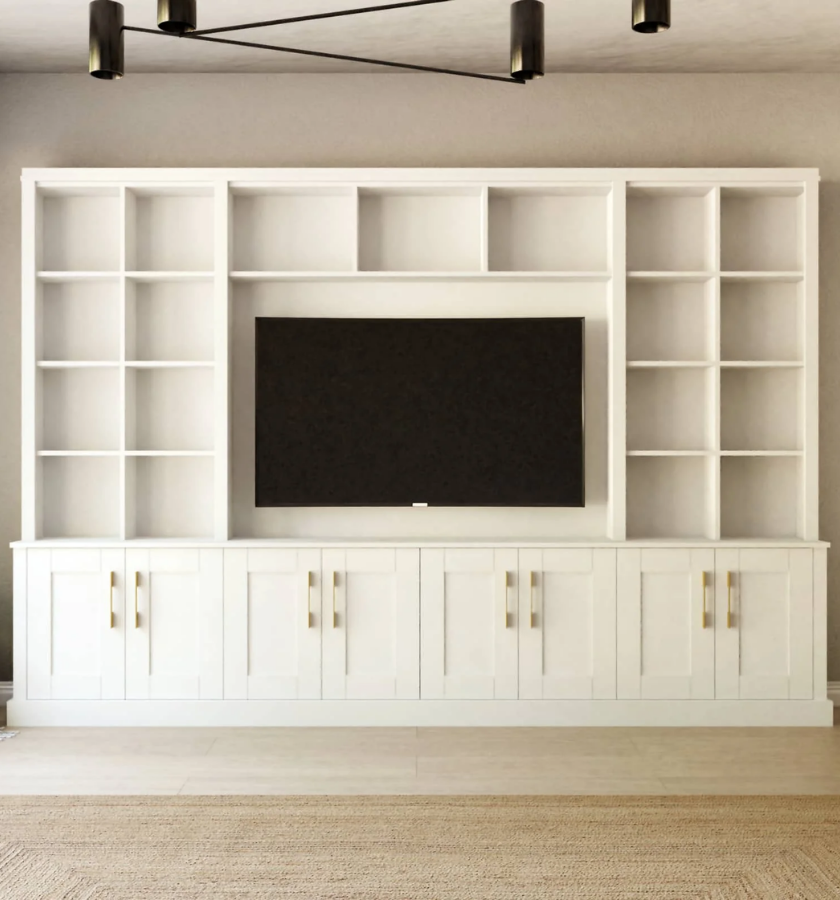
Full wall. Floor-to-ceiling cabinetry with the TV recessed into the centre. The most integrated look, and it makes the screen read as part of the architecture rather than a black rectangle.
Low run with floating shelves. A base cabinet under the TV with open shelving either side or above. Lighter, cheaper and easier to change later.
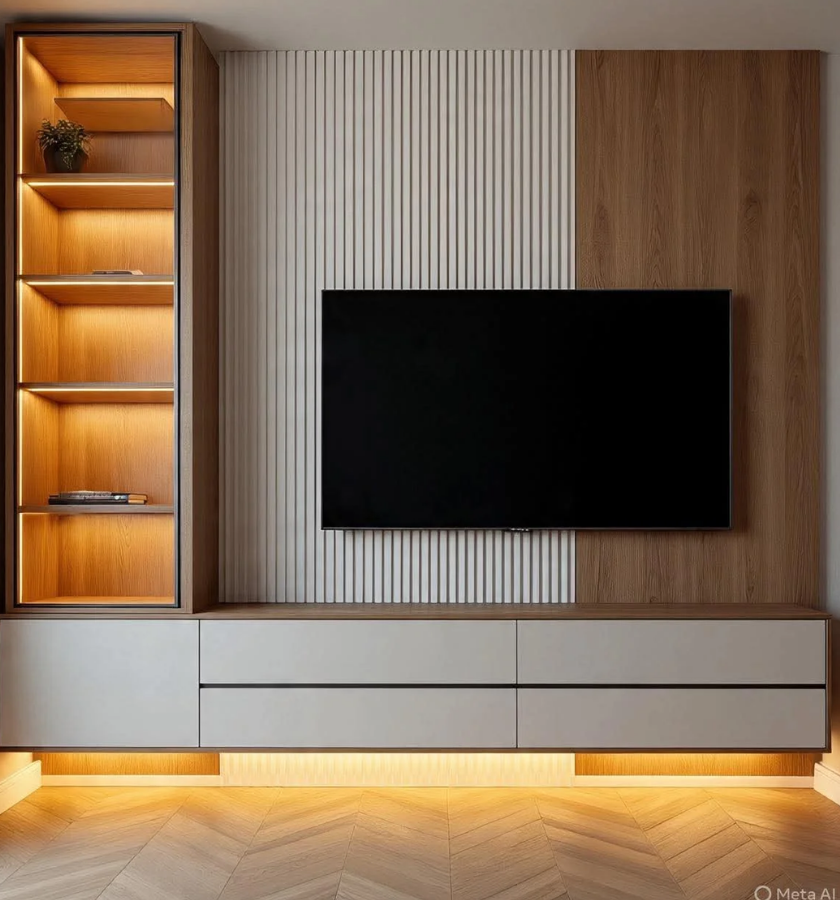
Asymmetric. Cabinetry weighted to one side, which suits rooms where the TV wall also has a window or a door.
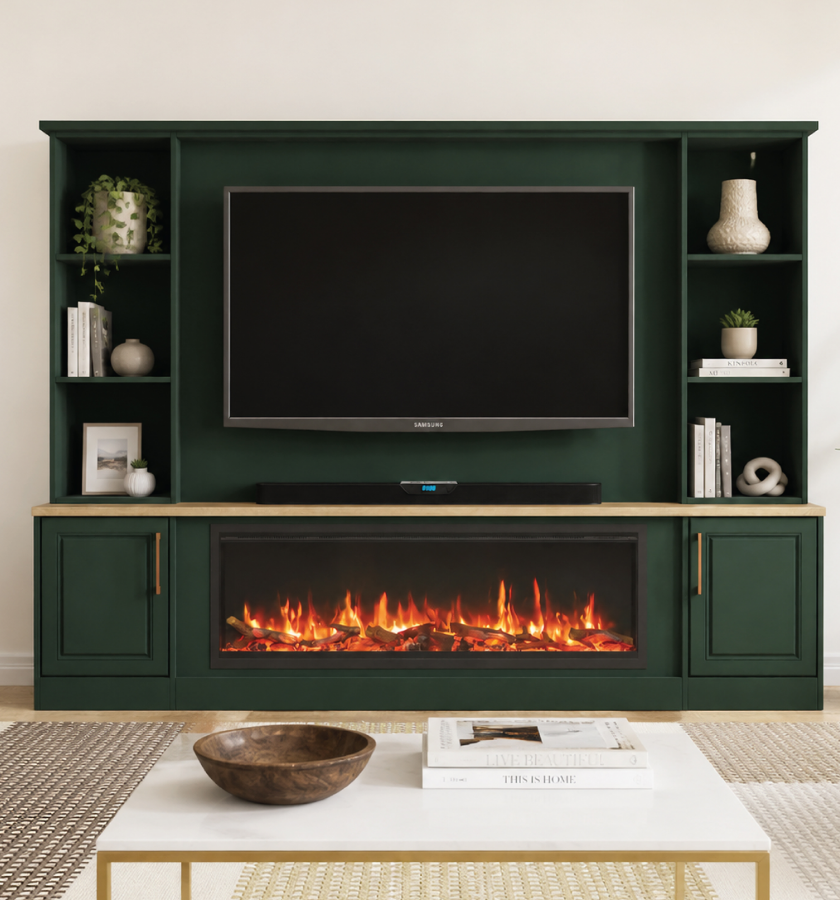
The fireplace conflict. Mounting a TV above a fireplace puts it too high for comfortable viewing and exposes it to rising heat. If you have a fireplace on the main wall, the better solutions are placing the TV on an adjacent wall, using a low linear fireplace with the TV above at a workable height, or a pull-down mount. We’ll talk through the options — and note that any clearance requirements around the fireplace itself come from the appliance’s listing, which your fireplace installer can provide.
Materials and lighting
This is a room where the cabinetry is the feature, so it’s worth spending on the visible surfaces. Wood veneer, fluted panels and painted MDF in a deep colour all work well. Matte finishes are preferable to gloss on a TV wall, since gloss reflects the screen.
Integrated LED lighting behind or above the screen reduces eye strain in a dark room and makes the joinery look considerably more expensive than it is. Run on a dimmer, ideally on a separate circuit from the room lighting.
Where the media wall continues into a basement bar or a home office run, designing them as one continuous piece of joinery reads better and usually costs less than two separate installations.
Pricing Plan
Chose best plan to upgrade your kitchens and closets
Basic
$
45
/Once
- quasi architecto beatae
- dicta sunt explicabo
- ipsam voluptatem quia
- Neque porro quisquam
Premium
$
93
/Once
- quasi architecto beatae
- dicta sunt explicabo
- ipsam voluptatem quia
- Neque porro quisquam
- dicta sunt explicabo
Standard
$
55
/Once
- quasi architecto beatae
- dicta sunt explicabo
- ipsam voluptatem quia
- Neque porro quisquam
FAQs
Everything You Need to Know
The centre of the screen at roughly seated eye level — about 1000 to 1100 mm from the floor for most sofas. Higher than that and you're looking up all evening, which is the most common complaint about TVs mounted over fireplaces.
Yes — through in-wall conduit or a chase inside the joinery, down to a recessed outlet behind the equipment bay. It's planned at design stage with your electrician. Retrofitting a clean route into a finished wall means opening drywall.
It can, and this is the most commonly overlooked detail. We build ventilated backs and rear channels, and add a fan where there's a full AV rack. Sealed cabinets genuinely shorten equipment life.
Not with solid doors and infrared remotes. Smoked glass or acrylic inserts let IR through, or we can leave the equipment bay open, or you can use an IR repeater. It's a design decision, so raise it early.
Yes, though we'll talk you through why mounting the TV above one is often uncomfortable to watch. Any clearance requirements around the fireplace come from the appliance's own listing — get those from your fireplace installer and we'll build to them.
It varies widely with size, material and how much is closed storage versus open shelving. A low run with floating shelves is a modest project; a full-height wall in wood veneer is a significant one. We quote after measuring.